Magnesium is an essential mineral that supports muscle function, nerve signaling, energy production, bone health, and many other important processes in the body. Including foods with magnesium in your daily diet can help you meet your nutritional needs and maintain overall health.
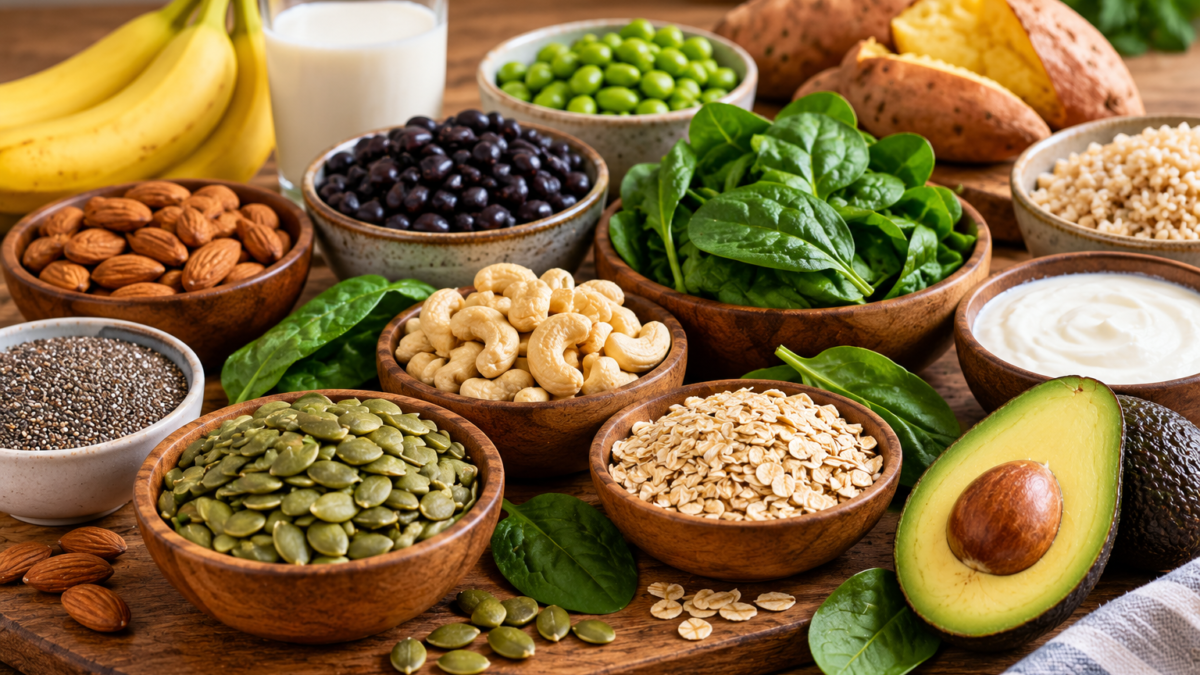
Some of the best magnesium-rich foods include pumpkin seeds, chia seeds, almonds, spinach, cashews, black beans, and whole grains. These foods provide magnesium along with other nutrients, such as fiber, protein, healthy fats, and vitamins.
Whether you are searching for foods high in magnesium, natural sources of magnesium, or vegetarian foods rich in magnesium, understanding which foods provide the most can help you make better dietary choices.
In this guide, discover 15 foods with magnesium, their health benefits, daily magnesium requirements, symptoms of deficiency, and simple ways to add magnesium-rich foods to your diet.
What Is Magnesium and Why Is It Important for Your Body?
Magnesium is an essential mineral involved in more than 300 enzyme systems that regulate different biochemical reactions. It helps maintain normal muscle and nerve function, supports blood glucose regulation, contributes to healthy bones, and plays a role in protein and DNA synthesis.
According to the NIH magnesium fact sheet, magnesium is also important for blood pressure regulation and energy production.
Your body cannot produce magnesium on its own, so you must obtain it through food and, when necessary, supplements.
The best dietary sources include nuts, seeds, legumes, whole grains, and green leafy vegetables. Eating a variety of these foods is generally a practical way to improve your magnesium intake.
What Are the 15 Best Foods With Magnesium?
The following foods provide useful amounts of magnesium. The nutrient values are based on serving sizes reported by the NIH Office of Dietary Supplements. Actual amounts may vary depending on the food variety, preparation method, and brand.
1. Why Are Pumpkin Seeds One of the Best Sources of Magnesium?
Pumpkin seeds are among the richest dietary sources of magnesium. One ounce of roasted pumpkin seeds provides approximately 156 mg of magnesium, or about 37% of the US Daily Value.
They also contain protein, healthy fats, zinc, and other important nutrients.
You can sprinkle pumpkin seeds over oatmeal, yogurt, salads, or homemade trail mixes. They are especially useful for people seeking plant-based foods high in magnesium.
2. How Do Chia Seeds Help Increase Magnesium Intake?
Chia seeds are another excellent source of magnesium. One ounce provides approximately 111 mg of magnesium.
They also contain dietary fiber, plant-based omega-3 fatty acids, and protein.
Add chia seeds to smoothies, overnight oats, yogurt, or homemade puddings. Soaking them in liquid creates a gel-like texture that works well in many breakfast recipes.
3. Why Should You Eat Almonds for Magnesium?
Almonds provide approximately 80 mg of magnesium per ounce. They also supply vitamin E, fiber, protein, and unsaturated fats.
A small handful of almonds makes a convenient snack and can contribute to your daily magnesium intake.
You can add chopped almonds to oatmeal, salads, or whole-grain cereal. Choose unsalted varieties if you want to reduce sodium intake.
4. How Much Magnesium Does Spinach Provide?
Spinach is one of the best leafy green vegetables for magnesium. Half a cup of boiled spinach provides approximately 78 mg of magnesium.
It also supplies folate, vitamin K, and other nutrients that contribute to a balanced diet.
Include spinach in soups, dal, vegetable curries, omelets, or other meals. Cooking reduces its volume, making it easier to consume a substantial serving.
5. What Makes Cashews a Good Magnesium-Rich Snack?
One ounce of dry-roasted cashews contains approximately 74 mg of magnesium.
Cashews also provide protein, unsaturated fats, and copper.
Enjoy a small handful as a snack or add cashews to vegetable dishes and homemade nut mixes. Because nuts are energy-dense, consider portion size as part of your overall dietary needs.
6. How Do Black Beans Support Your Magnesium Requirements?
Half a cup of cooked black beans provides approximately 60 mg of magnesium.
Black beans also contain plant-based protein, fiber, and complex carbohydrates, making them a nutritious choice for vegetarian and vegan diets.
Add black beans to soups, salads, wraps, rice dishes, or bean curries. Lentils and chickpeas are other useful legumes that can contribute to your magnesium intake.
7. Why Are Peanuts and Peanut Butter Good Sources of Magnesium?
One-quarter cup of oil-roasted peanuts provides approximately 63 mg of magnesium, while two tablespoons of smooth peanut butter contain around 49 mg.
Peanuts and peanut butter also provide protein and unsaturated fats.
Spread peanut butter on whole-grain toast, add it to oatmeal, or pair it with fruit for a convenient snack. Choose products with minimal added sugar and salt.
8. How Does Soy Milk Help You Get More Magnesium?
One cup of plain or vanilla soy milk provides approximately 61 mg of magnesium.
Soy milk also supplies plant-based protein. Fortified varieties may contain additional nutrients, including calcium and vitamin B12, depending on the product.
Check nutrition labels because magnesium content and fortification levels differ between brands.
9. What Are the Benefits of Edamame for Magnesium?
Edamame, or immature soybeans, provides approximately 50 mg of magnesium per half-cup serving when cooked and shelled.
It also supplies protein, fiber, and other minerals.
Enjoy edamame as a snack, add it to salads, or mix it into rice and vegetable dishes. It is a useful option for people seeking magnesium-rich plant foods.
10. Can Brown Rice Help Increase Magnesium Intake?
Half a cup of cooked brown rice provides approximately 42 mg of magnesium.
Brown rice retains more of the grain’s nutrient-rich outer layers than refined white rice. Whole grains generally contribute more magnesium than heavily refined grains.
Use brown rice in everyday meals, vegetable bowls, and grain salads. Oats and whole-wheat products are additional sources of magnesium.
11. How Much Magnesium Does Oatmeal Contain?
One packet of instant oatmeal provides approximately 36 mg of magnesium, although the amount varies by product.
Oats also contain beta-glucan, a type of soluble fiber that can help support healthy cholesterol levels as part of an appropriate diet.
Prepare oatmeal with milk or fortified soy milk and add chia seeds, almonds, or fruit for a nutritious breakfast.
12. Why Are Bananas Included in Foods High in Magnesium?
One medium banana provides approximately 32 mg of magnesium.
Bananas also contain potassium and carbohydrates that supply energy.
Add bananas to breakfast cereals, smoothies, yogurt, or whole-grain toast. Although bananas are a convenient source, seeds, nuts, legumes, and leafy vegetables generally provide more magnesium per serving.
13. How Can Potatoes With Skin Provide Magnesium?
A baked potato with its skin provides approximately 43 mg of magnesium per 3.5-ounce serving.
Potatoes also provide potassium and carbohydrates. Keeping the skin on contributes fiber and helps retain nutrients.
Try baked, boiled, or roasted potatoes as part of a balanced meal. Limit excessive added salt and oil to maintain a healthier preparation.
14. Does Yogurt Contain Magnesium?
An eight-ounce serving of plain, low-fat yogurt provides approximately 42 mg of magnesium.
Yogurt also contains protein and calcium. Some varieties contain live cultures, depending on how they are manufactured.
Include plain yogurt with breakfast, fruit, or meals. Check nutrition labels for added sugar and compare serving sizes when evaluating magnesium content.
15. Which Other Foods Can Help You Meet Your Magnesium Needs?
Several other foods can contribute to your daily magnesium intake:
- Whole-wheat bread: Provides magnesium and dietary fiber.
- Lentils and chickpeas: Supply magnesium, protein, and fiber.
- Avocados: Provide magnesium, potassium, and unsaturated fats.
- Fortified breakfast cereals: Some contain added magnesium.
- Milk: Provides smaller amounts of magnesium alongside calcium and protein.
For more detailed nutrient information, explore USDA FoodData Central, which provides nutritional composition data for a wide range of foods.
What Are the Main Health Benefits of Magnesium?
Magnesium is necessary for several essential functions in the body.
Supports normal muscle and nerve function: Magnesium helps regulate muscle contraction and nerve signaling. However, eating magnesium-rich foods is not a guaranteed treatment for muscle cramps.
Helps maintain healthy bones: Magnesium contributes to bone formation and works alongside other nutrients, including calcium and vitamin D.
Supports energy production: The body needs magnesium for numerous enzyme reactions involved in energy metabolism.
Contributes to blood pressure regulation: Magnesium plays a role in regulating blood pressure. Eating magnesium-rich foods is beneficial as part of a balanced diet, but it does not replace treatment for high blood pressure.
Supports blood glucose regulation: Magnesium participates in glucose metabolism. Adequate intake supports normal body functions, but magnesium-rich foods are not a substitute for diabetes treatment.
For additional evidence-based information, consult the NIH magnesium health professional fact sheet.
How Much Magnesium Do You Need Every Day?
Your recommended magnesium intake depends on age, sex, and life stage. The following figures are US dietary reference values published by the NIH.
| Age or life stage | Recommended daily intake |
|---|---|
| Adult men, 19–30 years | 400 mg |
| Adult men, 31 years and older | 420 mg |
| Adult women, 19–30 years | 310 mg |
| Adult women, 31 years and older | 320 mg |
| Pregnant women, 19–30 years | 350 mg |
| Pregnant women, 31–50 years | 360 mg |
| Breastfeeding women, 19–30 years | 310 mg |
| Breastfeeding women, 31–50 years | 320 mg |
These recommendations are based on US dietary reference values and may differ from local guidelines.
Read the NIH recommended dietary allowances for magnesium for further information.
What Are the Symptoms of Magnesium Deficiency?
Magnesium deficiency may occur because of inadequate dietary intake, certain digestive conditions, excessive mineral losses, or some medications.
Early symptoms can be subtle. More significant deficiency may cause:
- Loss of appetite
- Nausea and vomiting
- Fatigue and weakness
- Muscle cramps or contractions
- Numbness or tingling
- In severe cases, abnormal heart rhythms or seizures
These symptoms can have several causes and do not confirm magnesium deficiency on their own.
People with persistent symptoms, gastrointestinal conditions, or medical issues that affect nutrient absorption should consult a healthcare professional. The NIH magnesium consumer guide provides further details about deficiency and supplementation.
How Can You Add More Magnesium-Rich Foods to Your Daily Diet?
You do not need to rely on one food to meet your magnesium requirements. Combining several sources throughout the day is a practical approach.
- Breakfast: Prepare oatmeal with chia seeds, almonds, or fortified soy milk.
- Lunch: Include brown rice, lentils, black beans, or leafy vegetables.
- Snacks: Choose a small portion of pumpkin seeds, cashews, or peanuts.
- Dinner: Add spinach, beans, whole grains, or potatoes to your meal.
- Evening snack: Enjoy plain yogurt with fruit or nuts.
Choose a variety of foods rather than concentrating on one source. If you have kidney disease or take medicines that affect mineral levels, consult a healthcare professional before taking magnesium supplements.
Frequently Asked Questions About Foods With Magnesium
Which food contains the most magnesium?
Roasted pumpkin seeds are among the richest options in the NIH food-source table, providing approximately 156 mg per ounce.
Which fruits are rich in magnesium?
Bananas and avocados contain magnesium, although nuts, seeds, legumes, and leafy green vegetables generally provide more per typical serving.
What are the best vegetarian foods with magnesium?
Pumpkin seeds, chia seeds, almonds, cashews, spinach, black beans, lentils, soy products, and whole grains are excellent vegetarian choices.
Are eggs high in magnesium?
Eggs contain some magnesium but are not considered a particularly rich source. Nuts, seeds, legumes, and leafy greens are generally better options.
Can magnesium-rich foods improve sleep?
Magnesium supports normal nervous system function, but evidence that increasing magnesium intake improves sleep for everyone remains limited. Consult a healthcare professional about persistent sleep problems.
Is it better to get magnesium from food or supplements?
For most people, a balanced diet is the preferred way to obtain magnesium. Supplements may be appropriate when recommended by a healthcare professional, but excessive supplemental magnesium can cause side effects and interact with medications.
Conclusion
Including a variety of foods with magnesium in your daily diet can help support muscle and nerve function, energy production, bone health, and other essential processes.
Pumpkin seeds, chia seeds, almonds, spinach, cashews, black beans, soy products, whole grains, and other nutrient-rich foods are practical choices for meeting your daily magnesium requirements.
Focus on a varied, balanced diet rather than relying on a single food or taking supplements without a clear need. If you suspect a deficiency or have a medical condition that affects magnesium levels, consult a qualified healthcare professional for personalized advice.