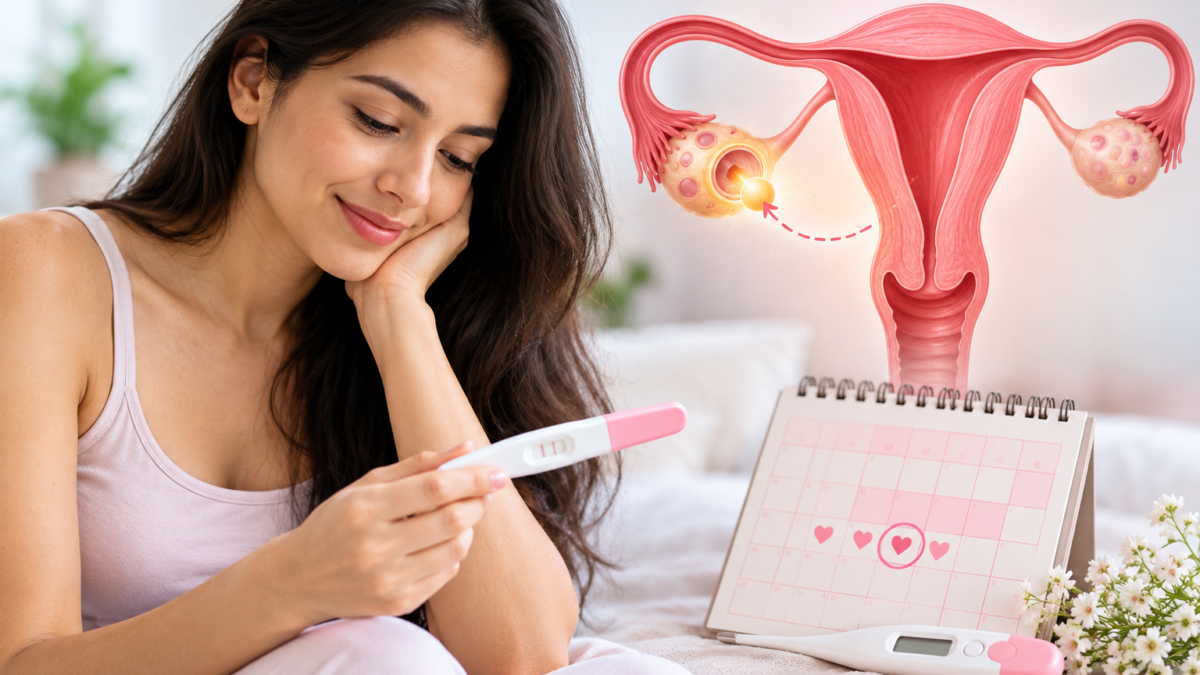
Ovulation is an important part of the menstrual cycle when one of the ovaries releases a mature egg. Understanding ovulation symptoms can help you recognize your fertile days, understand changes in your body, and plan for pregnancy if you are trying to conceive.
Some women notice clear changes during ovulation, such as slippery vaginal discharge, mild abdominal cramps, breast tenderness, or increased sexual desire. Others experience few or no noticeable symptoms. Both experiences can be normal.
Knowing the common signs of ovulation, when they occur, and how to track them can help you better understand your menstrual cycle. In this guide, we explain 10 common ovulation signs, how to identify your fertile window, and when to seek medical advice.
What Is Ovulation and Why Is It Important?
Ovulation occurs when one of the ovaries releases an egg that can potentially be fertilized by sperm. It usually happens once during a menstrual cycle, although the exact timing varies from person to person.
According to the Cleveland Clinic’s guide to ovulation, ovulation often occurs around day 14 of a 28-day cycle. However, not everyone has a 28-day cycle, and ovulation can happen earlier or later.
After the egg is released, it generally remains capable of being fertilized for approximately 12–24 hours. Sperm can survive in the reproductive tract for several days, which is why the days leading up to ovulation are also important for conception.
Recognizing ovulation symptoms can help you estimate when your body is most fertile, but symptoms alone cannot confirm the exact day an egg is released.
What Are the 10 Most Common Ovulation Symptoms?
Ovulation symptoms vary considerably. Some women experience several changes, while others may not notice any obvious signs.
1. How Does Vaginal Discharge Change During Ovulation?
One of the most recognizable signs of ovulation is a change in cervical mucus, which appears as vaginal discharge.
As ovulation approaches, estrogen levels rise and cervical mucus often becomes:
- Clear or transparent
- Wet and slippery
- Stretchy, similar to raw egg whites
- More noticeable than at other times in the cycle
This type of cervical mucus helps sperm move through the reproductive tract. After ovulation, discharge often becomes thicker, stickier, or less noticeable.
According to Mayo Clinic’s explanation of ovulation signs, changes in cervical mucus can help identify the days when conception is most likely.
2. Why Do Some Women Experience Ovulation Pain or Cramps?
Some women experience mild pain in the lower abdomen around ovulation. This is known as mittelschmerz, a term meaning middle pain.
Ovulation cramps may feel like a dull ache, a brief sharp twinge, or mild discomfort on one side of the pelvis. The side may vary between cycles.
According to the NHS guide to ovulation pain, this discomfort can last from a few minutes to one or two days.
Mild ovulation pain is often harmless. However, severe or persistent pelvic pain should not automatically be attributed to ovulation because conditions such as ovarian cysts, infections, or ectopic pregnancy can cause similar symptoms.
3. Can Breast Tenderness Be a Sign of Ovulation?
Hormonal changes throughout the menstrual cycle can cause breast tenderness or sensitivity.
Some women notice that their breasts feel sore, swollen, or more sensitive around ovulation. Others experience these changes primarily before their periods.
Breast tenderness alone is not a reliable way to identify ovulation because it can occur at several points in the menstrual cycle and may have other causes.
Tracking breast changes alongside cervical mucus and menstrual dates can provide more useful context.
4. Why Does Your Sex Drive Increase During Ovulation?
Some women notice an increase in sexual desire around their fertile window.
Hormonal changes, including fluctuations in estrogen, may contribute to changes in libido during the menstrual cycle. However, not everyone experiences an increase, and sexual desire can be influenced by stress, sleep, relationships, and other factors.
An increased sex drive may coincide with ovulation, but it cannot confirm that ovulation has occurred.
5. Can Bloating Be an Early Sign of Ovulation?
Mild abdominal bloating or a feeling of fullness can occur around ovulation.
Hormonal fluctuations may contribute to temporary changes in how your abdomen feels. However, bloating is common before menstruation and can also result from digestive issues, certain foods, or other conditions.
If bloating is persistent, painful, or accompanied by other concerning symptoms, consult a healthcare professional rather than assuming it is related to ovulation.
6. What Does Ovulation Spotting Look Like?
Some women notice a small amount of light bleeding or spotting around ovulation.
Ovulation spotting is generally much lighter than a regular menstrual period and may appear as a few pink or brown spots. It can occur alongside other ovulation signs, but many women never experience it.
Not all bleeding between periods is caused by ovulation. Repeated, heavy, or unexplained bleeding should be assessed by a healthcare professional.
7. How Does Basal Body Temperature Change After Ovulation?
Basal body temperature is your body’s resting temperature, measured immediately after waking and before getting out of bed.
After ovulation, progesterone causes a small rise in basal body temperature. If you measure your temperature consistently, you may notice a sustained increase compared with your earlier readings.
This method is more useful for identifying a likely ovulation pattern after the event than predicting the exact moment of ovulation in advance.
For more information about tracking fertility, see the American College of Obstetricians and Gynecologists’ guidance on fertility awareness.
8. Can You Feel More Energetic or Notice Mood Changes During Ovulation?
Some women report changes in energy, mood, or concentration during different stages of their menstrual cycle.
Hormonal fluctuations may contribute to these experiences, but the effects differ between individuals. Stress, sleep quality, nutrition, and other lifestyle factors also influence mood and energy.
Feeling energetic or experiencing mood changes is not a dependable way to determine whether you are ovulating.
9. Can Your Sense of Smell or Taste Change During Ovulation?
Some women report changes in their sensitivity to smells, tastes, or other sensory experiences around certain stages of the menstrual cycle.
However, these experiences are variable and are not established as reliable indicators of ovulation.
If you notice sensory changes, consider tracking them alongside more useful fertility indicators, such as cervical mucus and ovulation predictor kits.
10. Does Your Cervix Change During Ovulation?
Changes in the cervix can occur during the fertile window. The cervix may feel softer, sit higher, and become slightly more open as ovulation approaches.
These changes can be difficult to assess accurately, particularly for beginners. They may also vary between individuals and cycles.
Cervical position should not be used alone to confirm ovulation or as a dependable method of preventing pregnancy.
When Do Ovulation Symptoms Start and How Long Do They Last?
Ovulation symptoms may begin several days before an egg is released, particularly changes in cervical mucus. Other signs, such as mild ovulation cramps, may occur closer to the time of egg release.
In a typical 28-day menstrual cycle, ovulation often occurs around day 14, counting the first day of menstrual bleeding as day one. However, cycle length and ovulation timing differ between individuals and can change from month to month.
The egg generally remains viable for about 12–24 hours after release. The fertile window is longer because sperm can survive in the reproductive tract for several days.
Therefore, if you are trying to conceive, the days before ovulation are also important.
How Can You Tell If You Are Ovulating?
No single symptom reliably confirms ovulation in every person. Combining different tracking methods can give you a better estimate.
Track your menstrual cycle: Record the first day of each period and note your usual cycle length. Calendar estimates are less reliable when periods are irregular.
Observe cervical mucus: Clear, slippery, stretchy mucus often indicates that your fertile window is approaching.
Use an ovulation predictor kit: These home tests detect a rise in luteinizing hormone (LH) in urine. A positive result usually suggests ovulation may occur within approximately 24–36 hours, although this is not guaranteed.
Measure basal body temperature: A sustained temperature rise can help identify a pattern consistent with ovulation after it occurs.
For detailed guidance, refer to Mayo Clinic’s information on getting pregnant.
What Is the Best Time to Get Pregnant Around Ovulation?
The fertile window generally includes the five days before ovulation and the day of ovulation. Pregnancy is most likely when sperm are already present in the reproductive tract around the time the egg is released.
The Mayo Clinic’s fertility guidance explains that having sex regularly during the days leading up to ovulation and around ovulation can improve the chances of conception.
If you are trying to conceive, tracking cervical mucus and using ovulation predictor kits may help you identify your most fertile days.
If you want to avoid pregnancy, do not rely on ovulation symptoms or calendar predictions alone. Consider a reliable contraceptive method and seek professional guidance if needed.
When Should You See a Doctor About Ovulation Symptoms?
Mild, short-lived ovulation discomfort may not require treatment. However, some symptoms need medical attention.
Contact a healthcare professional if you experience:
- Severe or worsening pelvic or abdominal pain
- Pain that lasts longer than expected or repeatedly disrupts daily activities
- Heavy or unexplained bleeding between periods
- Fever, persistent vomiting, or unusual vaginal discharge
- Missed periods or persistently irregular menstrual cycles
- Difficulty conceiving despite regular attempts
Seek urgent medical care for severe abdominal pain, especially if pregnancy is possible or the pain is accompanied by fainting, dizziness, or heavy bleeding.
A healthcare professional can assess whether the symptoms are related to ovulation or another condition and recommend appropriate testing or treatment.
Frequently Asked Questions About Ovulation Symptoms
What are the first signs of ovulation?
A change to clear, slippery, stretchy cervical mucus is a common early sign that the fertile window is approaching. Some women also experience mild cramps or increased libido.
Can you ovulate without symptoms?
Yes. Many women do not notice obvious ovulation symptoms. Tracking cervical mucus, using ovulation predictor kits, or consulting a healthcare professional can help when more information is needed.
Does ovulation pain mean an egg has been released?
Not necessarily. Ovulation pain can occur around the time an egg is released, but pain alone cannot confirm the exact timing of ovulation.
Can ovulation symptoms feel like pregnancy symptoms?
Some symptoms, such as breast tenderness and bloating, can overlap. Ovulation symptoms cannot confirm pregnancy. A pregnancy test is the appropriate way to check for pregnancy.
How many days after your period do you ovulate?
It depends on your cycle length. Ovulation often occurs about 14 days before the next period rather than on a fixed number of days after the previous period.
Is clear, stretchy discharge normal during ovulation?
Yes. Clear, slippery, stretchy cervical mucus is common around the fertile window. Discharge with a strong odor, itching, or unusual discomfort may indicate a problem and should be assessed.
Conclusion
Recognizing ovulation symptoms can help you understand your menstrual cycle and estimate when you are most fertile. Common signs include changes in cervical mucus, mild pelvic pain, breast tenderness, bloating, spotting, and a slight rise in basal body temperature.
However, symptoms vary widely, and not everyone experiences noticeable changes. Combining cycle tracking with cervical mucus observations or ovulation predictor kits can provide a better estimate of your fertile window.
If you experience severe pain, unusual bleeding, or persistent menstrual irregularities, consult a healthcare professional. Understanding your body’s patterns is useful, but accurate information and appropriate medical care remain essential for reproductive health.