Vitamin B12 is an essential nutrient that supports healthy nerves, red blood cell production, DNA synthesis, and normal brain function. However, many people do not get enough vitamin B12 from their daily diet, particularly those following vegetarian or vegan diets and people who have difficulty absorbing nutrients.
Including the right vitamin B12 foods in your meals can help maintain healthy B12 levels and reduce the risk of vitamin B12 deficiency. From milk, curd, and eggs to fish, meat, and fortified breakfast cereals, several foods can help you meet your daily nutritional requirements.
In this guide, discover the 10 best sources of vitamin B12, their health benefits, daily vitamin B12 requirements, and practical ways to include B12-rich foods in your diet.
What Is Vitamin B12 and Why Is It Important?
Vitamin B12, also called cobalamin, is a water-soluble vitamin that plays a crucial role in several essential body functions. Your body needs it to produce healthy red blood cells, maintain the nervous system, and make DNA.
According to the National Institutes of Health (NIH) Office of Dietary Supplements, vitamin B12 also helps prevent megaloblastic anaemia, a condition that can cause fatigue and weakness.
Unlike many other nutrients, vitamin B12 occurs naturally mainly in animal-derived foods. Certain breakfast cereals, plant-based milk alternatives, and nutritional yeast products can also provide vitamin B12 when they are fortified with it.
What Are the 10 Best Vitamin B12 Foods?
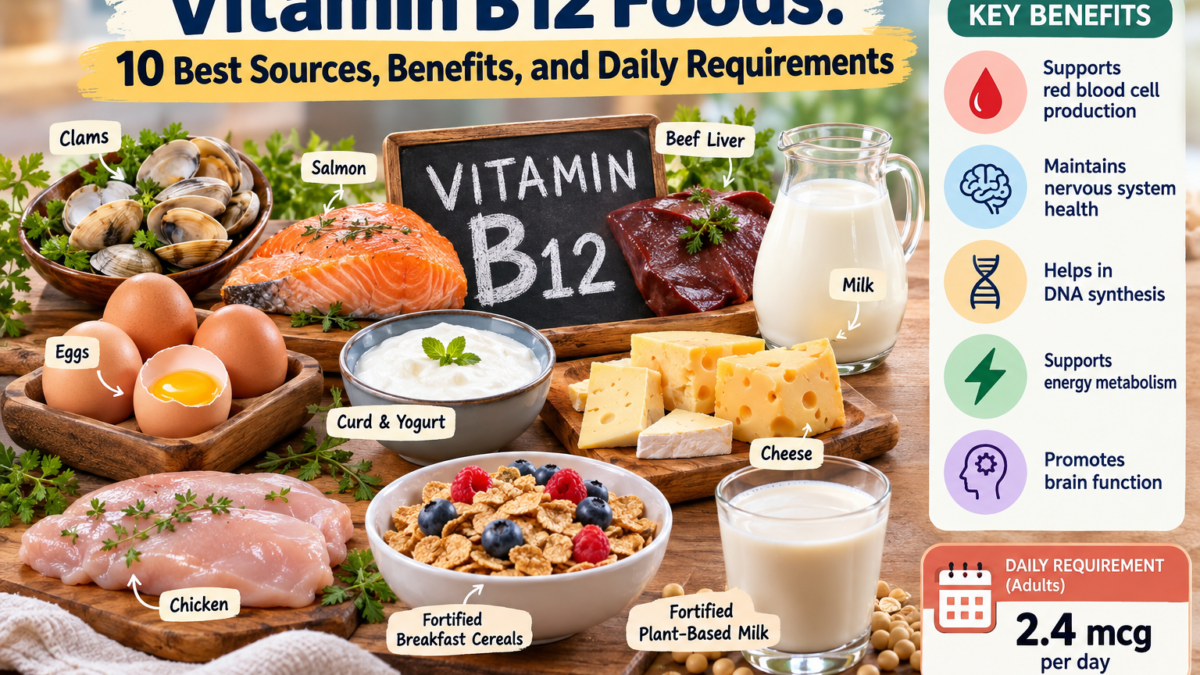
The best vitamin B12 food sources include animal products and fortified foods. The amount of B12 varies depending on the food, serving size, preparation method, and brand.
1. What Makes Clams One of the Best Sources of Vitamin B12?
Clams are among the richest natural dietary sources of vitamin B12. They also provide protein, iron, and other essential nutrients.
A 3-ounce serving of cooked clams can provide a substantial amount of vitamin B12, potentially exceeding the daily requirement by several times. However, the exact amount depends on the species and preparation method.
Clams are particularly useful for people who eat seafood and want to increase their vitamin B12 intake through food.
2. Why Is Salmon a Good Vitamin B12 Food?
Salmon is an excellent source of vitamin B12, high-quality protein, and omega-3 fatty acids. These nutrients support normal nerve function and contribute to overall health.
Adding cooked salmon to lunch or dinner can help increase your vitamin B12 intake while providing other beneficial nutrients. Other fish, including tuna and sardines, also contain vitamin B12.
3. How Does Beef Liver Help Meet Daily Vitamin B12 Requirements?
Beef liver is one of the most concentrated sources of vitamin B12. Even a small serving can supply substantially more than the recommended daily amount.
It also contains iron, vitamin A, and other nutrients. However, liver is exceptionally high in preformed vitamin A, so it should not be eaten excessively. Pregnant women are generally advised to avoid liver because excessive preformed vitamin A can harm an unborn baby.
4. Why Should You Include Milk in a Vitamin B12-Rich Diet?
Milk is a convenient source of vitamin B12 for vegetarians who consume dairy products. It also provides protein and calcium, which support bone health and normal body functions.
You can include milk in your breakfast, drink it on its own, or use it in smoothies and porridge. The vitamin B12 content varies with serving size and the type of milk.
5. How Can Eggs Provide Vitamin B12?
Eggs are another useful source of vitamin B12, particularly for people who follow an ovo-vegetarian diet.
Most of an egg’s vitamin B12 is found in the yolk. Eggs also provide protein and other nutrients, making them a practical breakfast option.
However, eggs contain less vitamin B12 per typical serving than some seafood and organ meats. People who eat eggs but avoid dairy and meat should pay attention to their overall B12 intake.
6. What Makes Curd and Yogurt Good Sources of Vitamin B12?
Curd and yogurt provide vitamin B12 along with protein and calcium. They are easy to incorporate into an Indian diet and can be eaten with meals or as a snack.
Plain yogurt can be served with breakfast, mixed with fruit, or included in a balanced meal. Vitamin B12 levels vary by product and serving size.
For vegetarians who consume dairy, milk, curd, and yogurt can collectively contribute to daily vitamin B12 requirements.
7. How Does Cheese Contribute to Vitamin B12 Intake?
Cheese contains vitamin B12, although the amount differs considerably between varieties. Some cheeses provide more vitamin B12 than others.
You can add cheese to sandwiches, whole-grain toast, salads, or cooked meals. Because cheese can also be high in saturated fat and sodium, choose suitable portions as part of a balanced diet.
Cheese is a useful additional source, but people with low B12 levels may need other dietary sources or medical treatment.
8. Why Is Chicken a Useful Vitamin B12 Food?
Chicken provides vitamin B12 along with lean protein and other nutrients. Although it generally contains less B12 than liver or certain seafood, it can contribute to overall intake.
Include properly cooked chicken in curries, soups, salads, or grilled meals. For a balanced diet, combine it with vegetables, whole grains, and other nutrient-rich foods.
9. Which Fortified Breakfast Cereals Contain Vitamin B12?
Fortified breakfast cereals can be a valuable source of vitamin B12, especially for vegetarians and vegans. Manufacturers add vitamin B12 to certain cereals during production.
However, not all breakfast cereals contain vitamin B12. Check the nutrition label for the amount of vitamin B12 per serving and the percentage of the daily value.
Choose cereals with an appropriate nutritional profile, preferably those that are lower in added sugar and higher in fibre.
10. How Can Fortified Plant-Based Milk Help Vegans Get Vitamin B12?
Fortified soy, oat, and other plant-based milk alternatives can help people who avoid dairy products meet their vitamin B12 needs.
Naturally, most plant-based milk alternatives do not contain meaningful amounts of vitamin B12 unless the vitamin has been added. Always check the product label to confirm that it is fortified.
For vegans, fortified foods and an appropriate B12 supplement, when needed, are important because unfortified plant foods are not reliable sources of this vitamin.
The NIH vitamin B12 fact sheet provides further information on natural and fortified sources.
What Are the Main Health Benefits of Vitamin B12?
Vitamin B12 supports several essential functions in the body.
- Supports red blood cell production: Vitamin B12 helps the body produce healthy red blood cells and reduces the risk of deficiency-related megaloblastic anaemia.
- Maintains nerve health: It supports normal nervous system function and helps maintain the protective structures surrounding nerves.
- Helps with DNA synthesis: Vitamin B12 is necessary for making DNA, the genetic material found in cells.
- Supports normal energy metabolism: It helps the body process nutrients and release energy from food. However, taking extra B12 does not necessarily increase energy if you already have adequate levels.
- Supports brain function: Adequate vitamin B12 is important for normal neurological function, memory, and concentration. Treating a deficiency can improve related symptoms, although supplements are not a proven memory booster for people without a deficiency.
For more information, refer to the NIH Office of Dietary Supplements.
How Much Vitamin B12 Do You Need Every Day?
The recommended daily amount depends on age and life stage. According to the NIH, the recommended dietary allowances for vitamin B12 are:
| Age or life stage | Recommended daily intake |
|---|---|
| Children aged 1–3 years | 0.9 mcg |
| Children aged 4–8 years | 1.2 mcg |
| Children aged 9–13 years | 1.8 mcg |
| Teenagers aged 14–18 years | 2.4 mcg |
| Adults aged 19 years and older | 2.4 mcg |
| Pregnancy | 2.6 mcg |
| Breastfeeding | 2.8 mcg |
These figures are based on US dietary reference values. Local recommendations may differ slightly.
You can review the complete recommendations in the NIH vitamin B12 consumer fact sheet.
What Are the Symptoms of Vitamin B12 Deficiency?
Vitamin B12 deficiency can develop gradually, and symptoms may initially be mild. Common signs include:
- Persistent tiredness or weakness
- Pale skin or breathlessness
- Numbness or tingling in the hands and feet
- A sore or red tongue
- Difficulty concentrating or memory changes
- Balance or walking problems
A deficiency can occur because of inadequate dietary intake, poor absorption, certain digestive conditions, or some medicines.
According to the NHS guidance on vitamin B12 deficiency, untreated deficiency can sometimes cause lasting neurological complications. If you experience persistent symptoms, consult a healthcare professional for assessment and appropriate testing.
Which Vitamin B12 Foods Are Best for Vegetarians and Vegans?
Vegetarians can obtain vitamin B12 from milk, curd, yogurt, cheese, and eggs if these foods are part of their diet.
Vegans need a more deliberate approach because unfortified fruits, vegetables, grains, pulses, nuts, and seeds are not reliable sources of vitamin B12.
Useful vegan options include:
- Vitamin B12-fortified breakfast cereals
- Vitamin B12-fortified plant-based milk
- Fortified nutritional yeast
- Vitamin B12 supplements when needed
Fermented foods and algae products should not automatically be considered reliable sources because their vitamin B12 content and bioavailability can vary. People following vegan diets should ensure they have a dependable, regular source of B12.
How Can You Add More Vitamin B12 Foods to Your Daily Diet?
You can improve your vitamin B12 intake by making a few practical changes to your daily meals.
- Breakfast: Have eggs, milk, yogurt, or a vitamin B12-fortified cereal.
- Lunch: Include curd or another suitable B12-containing food alongside a balanced meal.
- Dinner: Choose fish, chicken, or another appropriate source if you eat animal products.
- For vegans: Use fortified plant milk or fortified cereal and follow reliable supplement guidance if dietary sources are insufficient.
Read nutrition labels carefully because fortified foods vary in their B12 content. If you have a diagnosed deficiency, dietary changes alone may not be enough.
Frequently Asked Questions About Vitamin B12 Foods
Which food contains the highest amount of vitamin B12?
Clams and beef liver are among the richest natural sources of vitamin B12. The exact amount depends on the serving size and preparation.
Which fruits are rich in vitamin B12?
No common fruit is a reliable natural source of vitamin B12. People who avoid animal products should choose fortified foods or suitable supplements.
Is milk a good source of vitamin B12?
Yes. Milk provides vitamin B12 and can help vegetarians meet their daily requirements.
Can vegetarians get enough vitamin B12?
Yes, many vegetarians can obtain B12 from dairy products and eggs. Those who consume very little of these foods may need fortified products or supplements.
How much vitamin B12 do adults need daily?
The US recommended dietary allowance for adults aged 19 and older is 2.4 micrograms per day.
What is the best time to take vitamin B12?
There is no universally established best time. Follow the instructions for your prescribed supplement or the advice of your healthcare professional.
Can vitamin B12 supplements treat a deficiency?
Yes. Supplements or injections can treat vitamin B12 deficiency, depending on its cause and severity. A healthcare professional can recommend the appropriate treatment.
Conclusion
Eating the right vitamin B12 foods is essential for maintaining healthy red blood cells, supporting nerve function, and meeting your body’s nutritional needs. Seafood, liver, milk, eggs, yogurt, cheese, chicken, and fortified foods are useful sources, depending on your dietary preferences.
Vegetarians should include suitable dairy products or eggs if they consume them, while vegans need reliable fortified foods or supplementation. If you experience symptoms of vitamin B12 deficiency, seek medical advice rather than relying on food alone.
A balanced diet, informed food choices, and timely medical assessment can help you maintain healthy vitamin B12 levels and support your overall well-being.