
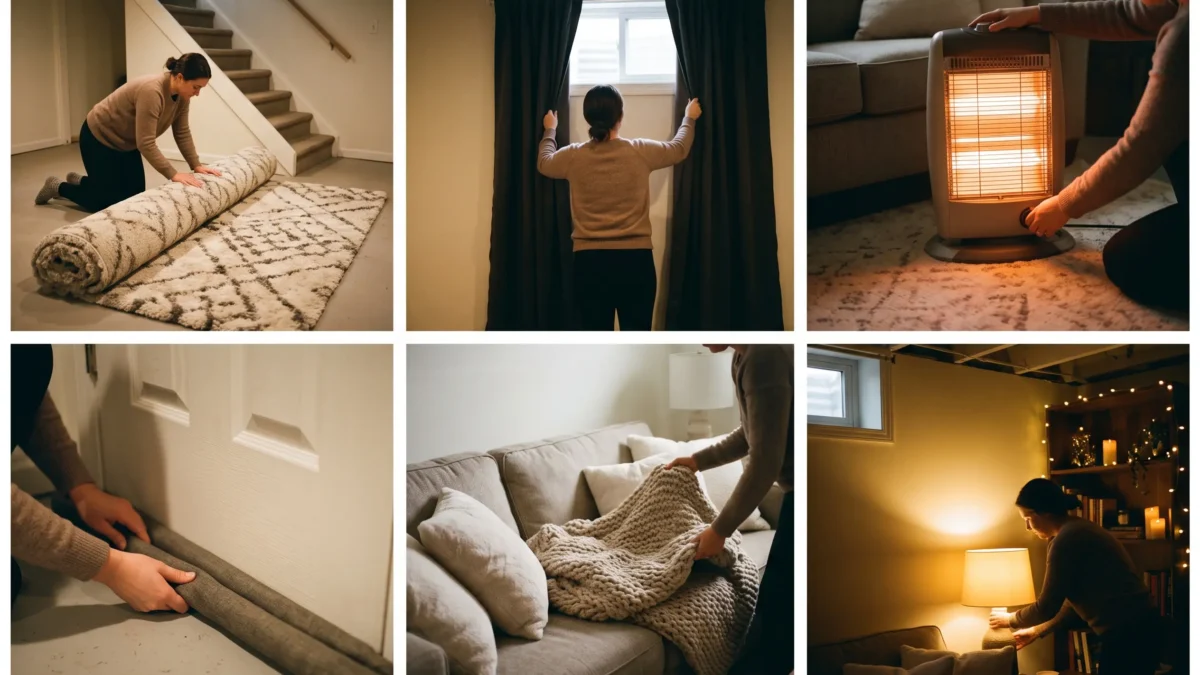
A basement can remain cold even when the rest of the house feels comfortable. Its concrete floor, foundation walls, small windows and limited sunlight naturally make it more difficult to retain warmth. Drafts and moisture can make the room feel even colder, while poor air circulation may leave some areas warm and others uncomfortable.
The good news is that you do not always need a complete renovation. The most effective approach is to reduce heat loss first, then choose a suitable heating method. Here are six practical ways to make a cold basement feel warmer during winter.
1. Seal drafts and air leaks
Before buying a heater, inspect the basement for places where cold air may be entering. Check around windows, exterior doors, electrical outlets, plumbing pipes, duct openings and wall penetrations.
Small gaps around doors and windows can allow warm air to escape continuously. Narrow cracks can usually be sealed with suitable caulk, while weatherstripping can improve the seal around movable doors and windows. A door sweep can reduce cold air entering beneath an exterior door.
For larger openings around pipes or cables, use an appropriate sealing material designed for that location. Do not seal openings that provide required ventilation or drainage. If the gap is near a furnace, boiler, gas water heater or other combustion appliance, consult a qualified professional before closing it.
You can find drafts by holding your hand near a suspected gap or by using a tissue to observe air movement. Check the basement on a windy or particularly cold day because air leaks are easier to identify.
Air sealing should usually be completed before adding insulation or increasing the heating level. Otherwise, heated air may continue escaping through the same gaps.
2. Add suitable insulation
Insulation helps slow heat transfer through basement walls, floors and ceilings. If the basement ceiling is unfinished, ceiling insulation may reduce heat movement between the lower level and the rooms above. If the exterior walls are cold, wall insulation may improve comfort significantly.
However, basement insulation must be installed carefully. Foundation walls can experience condensation or water intrusion, and covering a damp wall may trap moisture. Inspect the basement for leaks, wet patches, water stains and musty smells before starting the project.
Rigid foam boards, mineral wool and other insulation systems may be suitable depending on the wall construction and local building requirements. The correct material and installation method depend on the climate, foundation type and moisture conditions.
Do not install insulation over wet surfaces without correcting the underlying problem. This may hide water damage and increase the risk of mold. For extensive insulation work, ask a qualified building professional to inspect the basement and recommend a moisture-resistant system.
The basement floor also deserves attention. Concrete transfers cold from the ground, so an approved insulated subfloor system can make the room feel warmer. If you are not ready for a permanent flooring project, use suitable rugs or insulated floor mats as a simpler comfort improvement.
3. Use low-heat solutions in rarely used basements
Not every basement needs to be heated like a living room. If the space is mainly used for storage, laundry or occasional maintenance, a low-level heating solution may be enough to protect pipes, stored belongings and vulnerable materials.
A thermostat-controlled baseboard heater or another approved fixed heating system may help maintain a stable temperature. The goal is to prevent the area from becoming excessively cold, not to create unnecessary heat when nobody is using the room.
Avoid using improvised heating methods. Never use an oven, stove or outdoor heating appliance to warm an indoor basement. Fuel-burning heaters can create carbon monoxide hazards if they are not correctly installed and ventilated.
Keep storage boxes, clothing, paper products and furniture away from all heating equipment. Do not place items over radiators or in front of heating vents because blocked airflow can reduce performance and create overheating risks.
A low-heat approach can be practical for a basement that is not occupied regularly, but the system should still be professionally installed and operated according to the manufacturer’s instructions.
4. Supplement the main heating system safely
If you spend time in the basement for work, exercise, hobbies or family activities, you may need more warmth while the room is occupied. A portable electric heater can provide temporary heat without requiring a major heating upgrade.
Choose a heater with safety features such as overheat protection and tip-over shutoff. Place it on a stable, level, nonflammable surface. Keep curtains, bedding, clothing, cardboard, rugs and furniture away from the heater.
Plug the heater directly into a suitable wall outlet unless the manufacturer specifically allows another arrangement. Do not use a damaged cord, overloaded power strip or unsuitable extension cable.
According to national fire safety data, U.S. fire departments responded to an annual estimated average of 37,365 home heating equipment fires from 2020 through 2024. These fires resulted in an annual average of 417 civilian deaths, 1,260 injuries, and $1.2 billion in direct property damage. The data underscores why portable space heaters—which account for the vast majority of these fatal heating fires—must be operated with extreme care. Always turn space heaters completely off whenever you leave a room or go to sleep.
Keep anything that can burn at least three feet away from a heater. Install working smoke alarms and carbon monoxide alarms where required. If the basement needs constant heating, a permanent solution such as a properly designed ductless heat pump, baseboard system or HVAC improvement may be safer and more efficient than relying on a portable heater every day.
5. Improve windows and doors while controlling moisture
Basement windows and doors are common sources of heat loss. Check whether the frames close tightly and whether the seals are cracked or missing. Replace damaged weatherstripping and use suitable caulk around fixed window frames.
During winter, temporary window insulation film, cellular shades, thermal curtains and heavy blinds can reduce drafts. Open curtains during sunny periods to allow natural heat inside, then close them after sunset.
Never block an emergency escape window with furniture or permanent coverings. A basement bedroom or regularly occupied room must maintain a safe exit route.
Moisture must also be controlled because a damp basement often feels colder than a dry one. Look for condensation on windows, wet pipes, water stains, musty odors and damp corners.
The U.S. Environmental Protection Agency’s guidance on mold, moisture and homes recommends keeping indoor humidity below 60%, with an ideal range between 30% and 50%. A small hygrometer can help you monitor humidity accurately. If humidity remains high, use a properly sized dehumidifier and ensure that it drains safely.
The EPA also recommends drying wet materials within 24 to 48 hours after a leak or spill whenever possible. Repair plumbing leaks, improve drainage around the foundation and keep gutters clear. If mold covers a large area, repeatedly returns or may have entered the HVAC system, arrange a professional inspection instead of simply painting over it.
A dry basement usually feels more comfortable at a lower temperature, so moisture control can improve comfort without adding more heat.
6. Improve air circulation throughout the room
Warm air naturally rises, which can leave the basement cooler than the rooms above it. Even when the heating system is working, some parts of the room may remain cold because the warm air is not circulating properly.
A ceiling fan on a low winter setting can gently move warm air downward if the fan is suitable for the room. An oscillating fan may also help distribute heat, but it should not create an uncomfortable direct draft.
Keep furniture slightly away from exterior walls so air can circulate behind it. This also reduces the chance of condensation developing behind sofas, cabinets and storage shelves.
Do not cover heating vents with rugs, boxes or furniture. Keep air returns clear and clean dust from accessible vent covers. If the basement contains a furnace, boiler or other combustion appliance, do not reduce the ventilation required for safe operation.
Air circulation works best when combined with draft sealing and insulation. Moving air around the room cannot solve major heat loss through uninsulated walls or open cracks.
Make the basement feel warmer with lifestyle changes
After dealing with drafts, insulation, heating and moisture, use décor to improve the feeling of warmth. Large rugs, soft blankets, cushions, warm-coloured lighting and wooden accents can make the room more inviting.
Place a reading chair or work desk away from cold exterior walls. Use insulated mats under your feet in a home office or exercise area. Choose washable fabrics if the basement is prone to dust or humidity.
Keep storage organised and raised from the floor where necessary. Do not block windows, vents, drains, electrical panels or heating equipment with furniture or boxes.
A cold basement does not always require an expensive renovation. Start by identifying heat loss, sealing drafts, improving insulation, selecting the correct heating method, controlling moisture and distributing warm air more evenly. With these six practical improvements, a basement can become a safer, cosier and more useful part of the home throughout winter.